
Table of Contents
- Where Is Slinger, Wisconsin?
- Things to Do in Washington County WI
- Day Trips from Milwaukee: Why Slinger Makes the List
- Wedding Venues in Washington County
- Slinger WI Real Estate and Community Growth
- Local Favorites and Hidden Gems Around Slinger
- Making the Most of Your Visit to Slinger WI
- Frequently Asked Questions
Last Updated: September 12, 2026
Where Is Slinger, Wisconsin?
Slinger WI is a village in Washington County, in southeastern Wisconsin, sitting roughly 30 miles northwest of Milwaukee along Highway 41. That position makes it a genuine commuter town rather than a far-flung outpost: you get small-village pace with a metropolitan area within easy reach.
At Aspen Sky, we’ve watched that balance draw a steady stream of new residents and weekend visitors to the Slinger area. The village sits in Washington County’s eastern tier, bordered by Hartford to the west and Jackson to the south, with West Bend, the county seat, a short drive north.
Geography shapes daily life here more than most newcomers expect. Highway 41 runs along the village’s edge, Highway 60 cuts east-west toward the lake country, and the two together put Milwaukee, Fond du Lac, and the whole Washington County cluster within a comfortable drive.
Things to Do in Washington County WI
The county’s recreation scene centers on its park system, its trail network, and the small-town festivals that fill summer weekends. Washington County operates a large county park with camping, swimming, and winter sports, plus a growing web of paved trails that connect the communities.
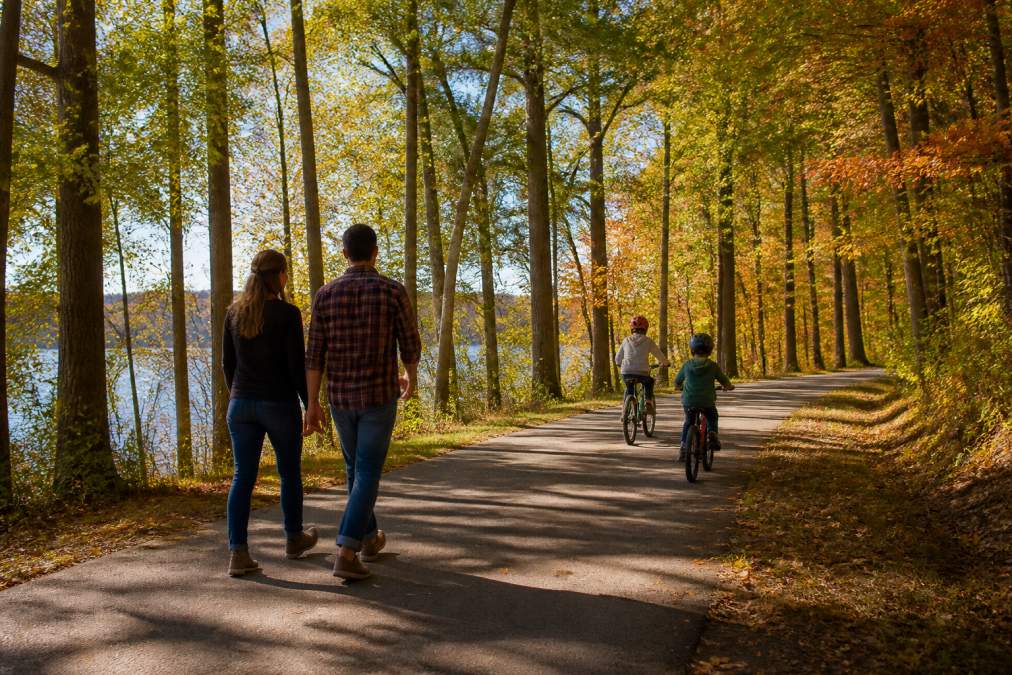
Outdoor activities range from golf courses and disc golf to fishing on the area’s lakes and rivers. The Wisconsin Department of Natural Resources manages several public hunting and fishing areas nearby. In town, Slinger’s community events, youth sports leagues, and the historic downtown give residents plenty to do without leaving the village.
Craft beverage enthusiasts have made Washington County a weekend destination in its own right. The county now supports a cluster of wineries, distilleries, and breweries, which is exactly the kind of draw that keeps visitors lingering past an afternoon.
Day Trips from Milwaukee: Why Slinger Makes the List
Slinger works as a day trip from Milwaukee because it delivers the rural escape without the long haul. A drive of under an hour puts you in farmland and lake country, and the village sits close enough to West Bend and Hartford that you can string three stops into one afternoon.
For Milwaukee families, the appeal is straightforward: less time in the car, more time actually doing something. A typical Saturday might start with a trail walk, move to a casual lunch, and finish with a drink on a patio while the kids run around. That last part matters more than most guides admit.
What makes Slinger different from a generic small-town stop is the concentration of things to do within Washington County. You are not driving 45 minutes for one attraction. You are driving 45 minutes for a whole region’s worth.
Wedding Venues in Washington County
Wedding venues in Washington County have quietly become some of southeastern Wisconsin’s most sought-after spaces, and Slinger sits near the center of that map. Couples who want a romantic setting without a downtown Milwaukee price tag increasingly look here first.
The best venues in the area share a few traits: indoor and outdoor options, room for a real dance floor, and staff who can handle a large guest list without the event feeling like a convention. Aspen Sky’s event center accommodates up to 270 guests, with both indoor and outdoor spaces and a full bar featuring house-made wines and spirits.
Here is a quick way to compare what matters when you tour any venue:
|
What to Check |
Why It Matters |
Ask This |
|---|---|---|
|
Guest capacity |
Determines layout and comfort |
Can you seat our full list with a dance floor? |
|
Indoor + outdoor space |
Weather backup and photo options |
What is the rain plan? |
|
Bar and beverage setup |
Biggest hidden cost driver |
Is the bar in-house or outside? |
|
Catering arrangement |
Coordination headache or not |
Do you handle food in-house? |
|
Date flexibility |
Protects your deposit |
What happens if our date changes? |
Slinger WI Real Estate and Community Growth
Real estate in the Slinger area reflects the broader pattern across Washington County: steady residential demand, new subdivisions on the village’s edges, and a housing stock that mixes older in-town homes with newer construction. Proximity to Milwaukee keeps buyer interest consistent, and the village has added rooftops while some rural Washington County communities have plateaued.
What most guides skip is the texture underneath that headline. The Slinger market breaks into a few distinct pockets, and each behaves differently:
- In-town village homes, older stock, smaller lots, walkable to the historic downtown, and often the entry point for first-time buyers or downsizers who want to stay near the village core.
- Newer subdivisions on the village edges, larger floor plans, builder-grade finishes, and HOA or municipal service arrangements that can differ block to block.
- Rural-residential parcels just outside the village, acreage, well and septic systems, and a different tax and utility picture than in-town properties.
- Lake and recreation-adjacent properties in the wider Washington County area, seasonal demand, higher price points, and more competition from Milwaukee-area second-home buyers.
School district quality drives much of the interest in the village proper. Families moving out from Milwaukee consistently rank public education near the top of their list, and the Slinger area’s schools are a major reason the village has grown while some rural communities have not. Buyers touring the area should confirm which district and which attendance boundary a specific address falls into, because boundaries do not always follow municipal lines.
Economic development has followed the rooftops. Commercial corridors along the highway have filled in with services, retail, and light industry, giving residents more local employment options than a village this size would typically support. Infrastructure spending on roads and utilities has kept pace with the growth, which is not something every fast-growing community manages well.
A few practical patterns worth knowing before you shop:
- Inventory moves in seasons. Spring and early summer bring the most listings; late fall and winter thin out, which can work in a motivated buyer’s favor.
- New construction and resale compete directly. Builders in the area’s newer subdivisions often offer incentives that shift the calculus against similarly priced existing homes.
- Commute math matters. A house that looks close on a map can add real time if it sits on the far side of Highway 41 during peak hours.
- Tax and service differences are real. Village services, town services, and rural well-and-septic setups carry different ongoing costs and responsibilities.
If you are relocating from Milwaukee, tour at rush hour, not on a Saturday morning. The drive that feels easy on a weekend is the one you will actually be making five days a week.
Local Favorites and Hidden Gems Around Slinger
The places locals actually return to are rarely the ones on a tourist map. Around Slinger, that means the small supper clubs, the roadside farm stands in late summer, and the quiet lake access points that never make a listicle. What follows is the kind of curated, category-by-category guide the big informational pages skip.
Food and drink spots locals keep semi-secret
Washington County’s supper club tradition is alive and well, and the Slinger area sits right in the middle of it. Expect classic Wisconsin fare, Friday fish fries, prime rib, brandy old fashioneds, in unpretentious rooms that have been serving the same families for decades. Beyond supper clubs, the county’s craft beverage cluster has grown into a genuine weekend draw: wineries, distilleries, and breweries scattered across Slinger, Hartford, West Bend, and the surrounding townships. Many offer patios, live music, and food trucks on weekends, which makes them an easy anchor for an afternoon.
Outdoor corners away from the main parks
The county park system gets the attention, but the lesser-known trailheads, boat launches, and fishing access points are where locals actually go. The Wisconsin Department of Natural Resources maintains several public hunting and fishing areas nearby, and the paved trail network that threads through Washington County connects communities in a way that rewards anyone willing to ride or walk a segment rather than a loop. Early mornings on the area’s lakes are quiet in a way the bigger recreation areas are not.
Seasonal stops that only operate part of the year
This is where the area really shines, and where a static guide falls short. A rough seasonal rhythm:
- Spring, trails dry out fast, orchard blossoms arrive, and the first farm stands reopen. A good window for quiet visits before the summer crowds.
- Summer, community festivals, live entertainment, farmers markets, and youth sports fill the calendar. Craft beverage patios hit their peak.
- Fall, harvest events, pumpkin farms, apple orchards, and orchard weekends dominate. This is the busiest stretch for day-trippers from Milwaukee.
- Winter, the county park system’s winter sports offerings (cross-country skiing, sledding, ice fishing where safe) take over, and indoor venues and supper clubs carry the social calendar.
A note on the historic downtown
Slinger’s historic downtown is small but genuine, the kind of main street with a few long-running businesses, community events, and a walkable feel that newer subdivisions cannot replicate. If you are coming from Milwaukee, the casual Saturday formula works well: pick one outdoor stop, one food stop, and one drink stop, and let the day breathe. Rushing the county defeats the point.
Making the Most of Your Visit to Slinger WI
Plan around the season and you will get far more out of a Slinger WI visit. Summer and early fall are peak for outdoor activities and live entertainment; winter suits indoor venues and quieter restaurant visits.
Commuter logistics are worth understanding even for visitors. Highway 41 moves quickly outside rush hour, and the drive from Milwaukee is manageable enough that an after-work trip is realistic. Weekends are busier at popular parks and venues, so booking ahead helps.
For groups, the area handles everything from a casual afternoon with friends to a full private event. Aspen Sky’s customers regularly mention the hospitality and the indoor-outdoor setup as reasons they keep coming back, and the venue’s space for up to 270 guests makes it work for both intimate gatherings and large celebrations.
Frequently Asked Questions
How far is Slinger from Milwaukee?
Slinger is roughly 30 miles northwest of Milwaukee, which usually means a 35 to 45 minute drive depending on traffic and your starting point. The village sits just off Highway 41, so the trip is straightforward for commuters, weekend visitors, or couples scouting wedding venues in Washington County. Many people treat Slinger as a relaxed escape from the city without giving up easy access to Milwaukee’s restaurants, airports, and job centers.
What is Slinger, Wisconsin known for?
Slinger is known for its small-town feel, strong public schools, and position in Washington County. The village has a rich history tied to its early days as a railroad and farming community, and today it blends that heritage with modern residential growth. It is also becoming a destination for craft beverage lovers and event-goers, with local spots like Aspen Sky offering hand-crafted wines, spirits, and a welcoming space for gatherings.
What are the best outdoor activities in Washington County?
Washington County offers plenty of outdoor recreation, from hiking and biking on the Eisenbahn State Trail to fishing and boating on Big Cedar Lake and Little Cedar Lake. Parks like Regner Park in West Bend and the Washington County Fair Park host seasonal events and farmers markets. In Slinger, community parks and nearby nature areas provide space for walking, picnicking, and family outings. Many visitors combine a morning outdoors with an afternoon stop at a local winery or distillery.
How does the community of Slinger balance history and modern growth?
Slinger honors its past through historical preservation efforts, including local landmarks and a historical society that keeps the village’s railroad and farming roots alive. At the same time, the community has welcomed new residential developments, updated infrastructure, and modern amenities that attract families and businesses. This balance shows up in everything from restored downtown buildings to new event spaces, giving residents a sense of continuity while still moving forward.