
Last Updated: November 21, 2026
Quick Summary
A sustainable winery wedding starts with asking a venue specific questions about energy, water, waste sorting, reusable dishware and vendor rules, then planning food, wine, decor and guest transport to reduce waste. Choosing a seasonal menu, local vendors and reusable items keeps the day low-impact and can also lower costs.
- Ask venues specific questions about energy, water, waste sorting and dishware rather than whether they are “green”.
- Get any sustainability commitments in writing as a contract addendum, since some features apply only to certain spaces or seasons.
- Choose a seasonal menu, fewer dishes and local vendors to cut both costs and emissions.
- Use keg wine or refillable carafes where possible, and skip single-use plastic cups and straws at the bar.
- Arrange a shuttle or carpool links so guests can reach the rural venue without driving alone.
Table of Contents
- Why a Winery Venue Suits a Low-Impact Wedding
- Step 1: Ask the Right Questions Before Booking Your Winery
- Step 2: Build a Sustainable Winery Wedding on a Budget
- Step 3: Plan Sustainable Wedding Catering and Wine Service
- Step 4: Choose Vineyard Wedding Decor Ideas That Are Reusable
- Step 5: Apply Zero-Waste Wedding Tips Across the Day
- Step 6: Get Guests to a Rural Vineyard Venue Without Driving Alone
- Booking Your Sustainable Winery Wedding at Aspen Sky
- Frequently Asked Questions
Why a Winery Venue Suits a Low-Impact Wedding
Planning a sustainable winery wedding is one of the easiest ways to keep your big day green. Aspen Sky, a winery, distillery, and event center in Slinger, Wisconsin, gives couples a setting that already runs on many low-impact habits. U.S. Environmental Protection Agency guidance on sustainable events
Aspen Sky offers both indoor and outdoor event spaces, so you can choose the setting that fits your season and plans.
Here is what this guide covers:
- Questions to ask before you book
- Budget-friendly choices that still feel sustainable
- Catering, wine service, and food waste
- Reusable decor and zero-waste habits
- Getting guests to a rural venue without everyone driving alone
Step 1: Ask the Right Questions Before Booking Your Winery
Most venue guides tell you to ask whether a property is “green.” That question is too vague to act on. A winery is an agricultural and manufacturing operation as well as an event space, so its sustainability story lives in specific systems: irrigation, refrigeration, bottling, waste sorting, and how it handles events on top of daily production. Treat the venue tour as a due-diligence interview, and bring a written list.
Use this winery-specific checklist when you talk to a venue:
- Energy: Does the property use renewable energy, such as solar arrays or a renewable-energy credit program? Are event spaces lit with LED fixtures, and are there dimmers or zone controls so you are not lighting empty rooms?
- Water: How is vineyard and landscape irrigation managed? Are there drip systems, soil-moisture sensors, or drought-tolerant plantings? Does the venue have low-flow fixtures in event restrooms?
- Waste sorting: Is there a recycling and composting program for events, and are bins clearly labeled and staffed? Ask what happens to glass bottles, corks, and food scraps after a reception.
- Dishware: Are reusable plates, glassware, and flatware included in the rental, or is there an upcharge? Are there enough for your guest count without disposables as backup?
- Sourcing: Does the winery source produce and wine locally, and can it tell you which items come from within the region?
- Wine handling: How does the venue handle leftover wine, unopened bottles, and kegs? Can you take unopened bottles home, or does the venue return or donate them?
- Vendor rules: Can you bring in your own sustainable vendors, such as a local florist or a caterer with a composting program? Are there exclusivity clauses that force you into the venue’s vendors?
- Measurement: Does the venue track waste, energy, or water use from past events, and will it share numbers? A winery that measures its impact can usually give you real figures rather than adjectives.
Ask for specifics, not adjectives. “We recycle” is not an answer; “we sort glass, cardboard, and food scraps, and our hauler picks up compost weekly” is. Read more about how to evaluate event venue sustainability claims before you tour, and bring the checklist on a clipboard so you can take notes on the spot.
A useful booking script is to ask the same five questions of every venue you visit: What is your energy source? How do you handle water? What is your waste-sorting process? What is included in the rental versus upcharged? And what are your rules for outside vendors? Comparing answers side by side makes the trade-offs obvious.
Watch out: Some venues list “eco-friendly” features that only apply to certain spaces or seasons. Confirm exactly which areas, services, and months are covered in your contract, and get the sustainability commitments in writing as an addendum if they matter to you.
For more on comparing venues, see our guide to unique wedding venues near Milwaukee in 2026.
Step 2: Build a Sustainable Winery Wedding on a Budget
A sustainable winery wedding does not have to cost more. Often it costs less, because fewer single-use items and rentals are needed. Pricing depends on your guest count, date, and the services you choose, so check Aspen Sky’s wedding pricing for current details before you set a budget.
Small choices add up fast:
- Pick a seasonal menu and fewer dishes.
- Hire local vendors to cut transport costs and emissions.
Start with your priority list. Decide which parts matter most to you, such as the food, the flowers, or the ceremony setting. Spend there and keep the rest simple.
Costs depend on your guest count, date, and chosen services, but a few choices reduce spending and waste at once.
| Choice | Why it helps | Effect |
|---|---|---|
| Seasonal menu, fewer dishes | Less food and fewer ingredients to source | Lower cost |
| Local vendors | Cuts transport distance | Lower emissions |
| Priority list | Spend on what matters most | Simpler elsewhere |
Step 3: Plan Sustainable Wedding Catering and Wine Service
Food and drink are often the largest source of waste at a wedding, and at a winery the beverage side deserves its own plan. A plant-forward menu with seasonal, local ingredients lowers both cost and environmental impact. Look at the catering options available at Aspen Sky to see what the venue offers for your event.
Here are practical steps for sustainable catering:
- Confirm your guest count early to avoid over-ordering, and set a firm RSVP deadline two to three weeks out.
- Choose seasonal, locally sourced produce, and ask the caterer which items are at their peak.
- Offer a mix of plant-forward and meat dishes so vegetarian guests are not an afterthought.
- Plan leftovers with a donation partner, such as a local food pantry, and confirm the pantry accepts prepared food before the event.
- Ask for reusable serveware instead of disposable plates, and confirm the count covers your event.
- Choose family-style or buffet service over plated dinners where it fits your vision; guests tend to take only what they will eat, which reduces plate waste.
Wine service is where winery weddings differ from other venues, and it is where most guides go quiet. Start with quantity. A common planning rule is to estimate roughly one drink per guest per hour for a reception of three to four hours, then adjust down if you have a daytime event, a older guest list, or a strong non-drinking contingent. Ask the venue whether it pours by the bottle, by the glass, or from a keg, because each format produces different waste.
Bottle and packaging choices matter:
- Ask whether the winery offers keg wine or refillable carafes for the reception.
- If you use bottles, confirm the venue recycles glass and corks, and ask where the bins are placed so guests actually use them.
- Skip single-use plastic cups and straws at the bar, and use glassware or reusable cups instead (the EPA).
Leftover wine needs a plan before the last dance. Ask the venue how it handles unopened bottles after the event. Ask the venue what its policy is for unopened bottles and for open bottles, so you know what to expect. Choose a wine selection that suits your guest count so fewer bottles go unused, and consider a smaller list of well-matched wines over a broad selection that leaves half-empty bottles.
Watch out: Confirm how leftovers and unopened wine are handled and whether you can take them home. Get the policy in writing before you sign.
Step 4: Choose Vineyard Wedding Decor Ideas That Are Reusable
Decor is one of the easiest areas to make more sustainable. Reusable items like glass jars, wooden signs, and linens can be used again at future events or donated afterward.
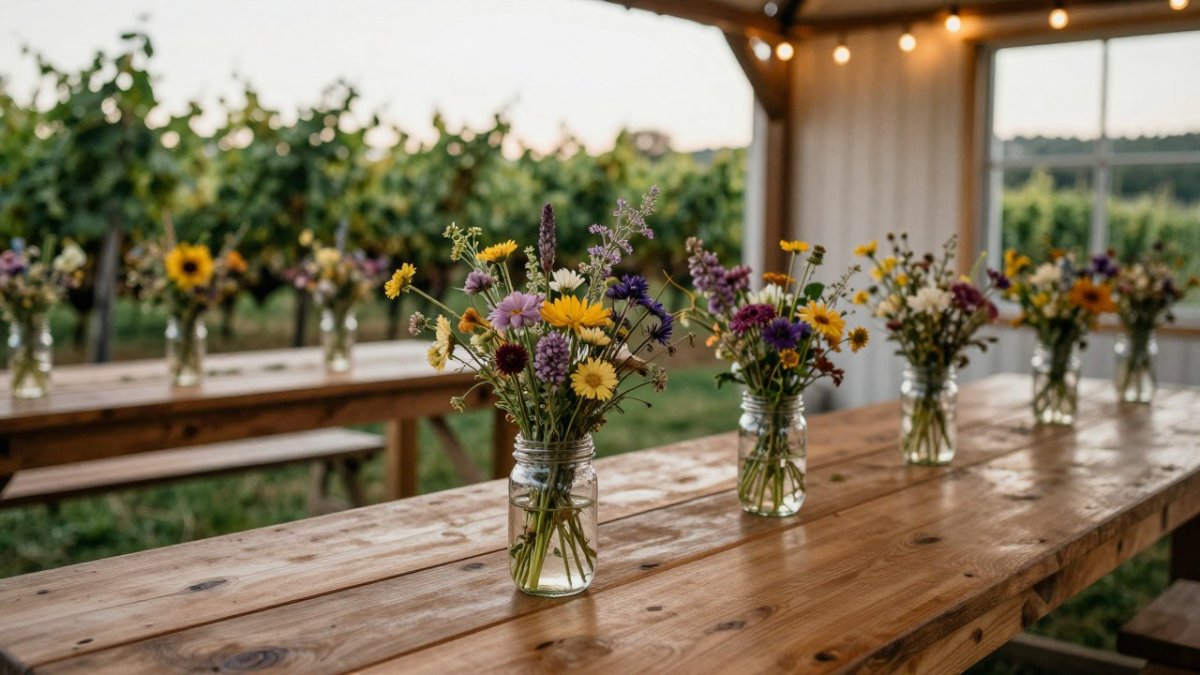
Try these vineyard-friendly ideas:
- Use seasonal, locally grown flowers or potted plants you can keep after the wedding.
- Borrow or rent candles, lanterns, and table linens.
- Use wine barrels, bottles, and crates as natural decor.
- Print fewer paper goods and send digital invitations.
- Donate flowers to a local hospital or senior center after the reception.
Repurposed decor also gives your space a personal touch. A few upcycled wooden signs can carry through the whole day without new materials.
Step 5: Apply Zero-Waste Wedding Tips Across the Day
Zero-waste planning works best when you think about the whole day, not just one part. Set clear goals before the event so vendors and guests know what to expect.
Try these zero-waste steps:
- Provide clearly labeled bins for recycling, compost, and trash.
- Skip single-use plastic straws and cups.
- Use cloth napkins and reusable serveware.
- Offer tap water stations alongside drinks.
- Ask your caterer to plan portions and track leftovers.
Quick tip for the day: Assign one friend or family member to watch the waste stations. Their job is to point guests to the right bin.
Measure the results when you can. Count the bags of trash and compost after the event. This simple step helps you plan better next time.
Step 6: Get Guests to a Rural Vineyard Venue Without Driving Alone
Rural winery venues can be harder to reach by public transit, so guest transport needs planning. Carpooling and shuttles cut the number of cars on the road and reduce emissions.
Consider these options:
- Arrange a shuttle from a central pickup point in Milwaukee or a nearby town.
- Share ride links on your wedding website so guests can carpool.
- Suggest a designated driver plan for guests who stay overnight.
- Pair guests with others who live nearby before the event.
Tell guests about the transport plan early. Include directions, parking details, and any shuttle schedules in your invitations or wedding website. Clear details help more guests choose the lower-impact option.
Booking Your Sustainable Winery Wedding at Aspen Sky
Aspen Sky is a winery, distillery, and event center in Slinger, built for welcoming gatherings. You can see the wedding services and packages offered at Aspen Sky before you plan your day. You can explore the event options at Aspen Sky to see which indoor and outdoor spaces fit your guest count, which can accommodate up to 270 people. Once you know your date and budget, reach out to the team to talk through your sustainability goals and plan your day together.
Frequently Asked Questions
How can you plan a sustainable winery wedding on a budget?
Start with a date and guest count that fit your budget. Use rented or reusable decor, keep the floral arrangements small and seasonal, and skip single-use favors. Pricing depends on quantity, dates, and delivery, so request a current quote from Aspen Sky’s pricing page before finalizing your plan.
How can you reduce waste at a winery wedding?
Ask the venue how it handles glassware, dishware, recycling, and composting after the event. Keep bottle counts tied to your guest list to avoid excess, and avoid single-use plastic cups, straws, and table covers.
What food and drink choices make a wedding more sustainable?
Plant-forward and seasonal menus reduce both environmental impact and food waste. Ask your caterer to plan portions based on RSVPs and to package leftovers for guests.
How can guests travel more sustainably to a winery wedding?
Rural vineyard venues are often hard to reach by public transit, so encourage carpooling and share ride details in your invitation or wedding website. Ask the venue about parking capacity before you set the plan.
