
Quick Summary
Craft whiskey is made in small batches by hand, with close attention at every stage. The grain is malted, milled, mashed in hot water, fermented with yeast, distilled in a pot still, aged in charred oak barrels, and then proofed and bottled. Each step shapes the final flavor of the craft whiskey.
- Grain is malted so its starches can turn into fermentable sugars.
- Distiller’s beer typically sits around 8 to 10 percent alcohol before distillation.
- Distillers split each run into heads, hearts and tails, keeping only the hearts for barrels.
- A higher share of corn makes a sweeter spirit, while rye adds spice and bite.
- Aging in charred oak gives whiskey its color and vanilla, caramel and spice notes.
Table of Contents
What Makes a Distillery Craft
Craft whiskey is whiskey made in small batches, by hand, with close attention to every stage from grain to glass. At Aspen Sky, our distillery in Slinger, Wisconsin, follows that approach. Most people picture a big industrial plant when they think of whiskey, but a craft distillery works on a much smaller scale and with more hands on the process.
What sets a craft distillery apart comes down to scale and control. A small team can watch each batch closely, adjust the mash or the cut points as needed, and taste the results before anything leaves the building. That hands-on attention is the heart of the craft approach.
There is no single legal definition that every craft distillery must meet, so it helps to know what to look for. Ask how big the batches are, who makes the decisions at each step, and whether the grain and water are sourced locally or chosen for a specific flavor. A distillery that can answer those questions in plain terms is usually one that takes the craft seriously.
Craft Whiskey Production Steps From Grain to Barrel
Every bottle starts with grain, and the steps that follow turn that grain into spirit. Here is the basic order most craft distilleries follow:
- Malt the grain so its starches can turn into sugars
- Mill the malt into a coarse grist
- Mash the grist in hot water to dissolve those sugars
- Ferment the sweet liquid with yeast into a low-alcohol “distiller’s beer”
- Distill the beer in a pot still to concentrate the alcohol and flavor
- Age the spirit in charred oak barrels
- Proof and bottle the finished whiskey
Each step affects the final flavor, so skipping or rushing one changes the outcome.
Malting and Milling the Grain
Malting begins by soaking grain, usually barley, in water until it starts to sprout. The germinating grain releases enzymes that break down starch. The maltster then dries the grain to stop growth.
After malting, the grain is milled into a grist. The goal is to crack the kernels open without turning them to flour, because the husks help the mash drain later. Coarse, even milling gives better extraction. Too fine, and the mash can clog the equipment.
Mashing, Fermentation and Distillation
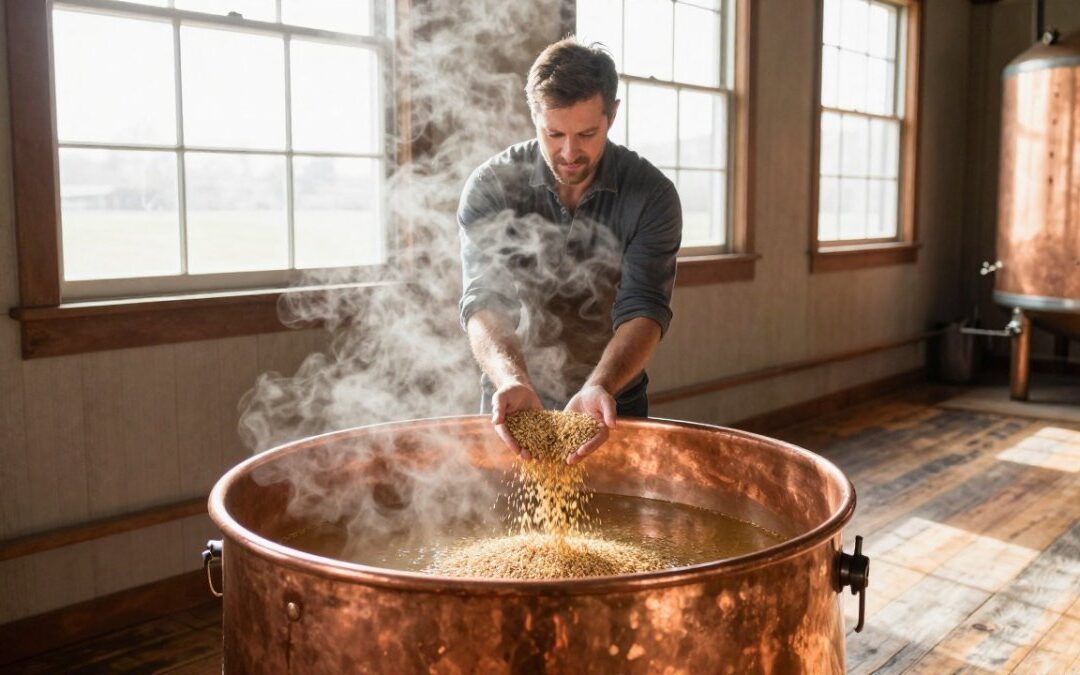
In the mash tun, the milled grain is mixed with hot water. Enzymes convert the remaining starches into fermentable sugars, and the result is a sweet liquid called wort. The wort is cooled and moved to fermenters.
Yeast is added to the wort, and over a few days it converts sugar into alcohol and carbon dioxide. The liquid that comes out, often called distiller’s beer, is usually around 8 to 10 percent alcohol. It tastes rough and yeasty, which is normal at this stage.
Distillation then concentrates the alcohol and the flavor compounds. In a pot still, the beer is heated and the vapor rises through a neck and condenser, then drips back as a much stronger spirit.
Choosing Your Mash Bill, Water and Yeast
The mash bill is the recipe of grains used in a batch. A higher share of corn tends to make a sweeter, rounder spirit, while rye adds spice and bite. Wheat can soften the finish.
Water matters more than most people expect. Its mineral content can affect fermentation and the final taste, so many distilleries filter or treat their water to keep it consistent from batch to batch.
Yeast strain shapes the flavor too. Different strains produce different levels of fruity or floral compounds during fermentation. Choosing a yeast is one of the quieter decisions in the process, but it often has a loud effect on the glass.
A common mistake is changing several of these variables at once. Adjust one at a time, taste each batch, and keep notes so you can tell what actually made the difference.
Distilling, Heads, Hearts and Tails
Not all of the distillate is worth keeping. Distillers divide each run into three parts:
- Heads: the first liquid off the still, high in solvents and harsh-tasting compounds
- Hearts: the middle cut, the smooth and flavorful spirit that goes into the barrel
- Tails: the final liquid, heavy and oily, which is usually set aside or redistilled
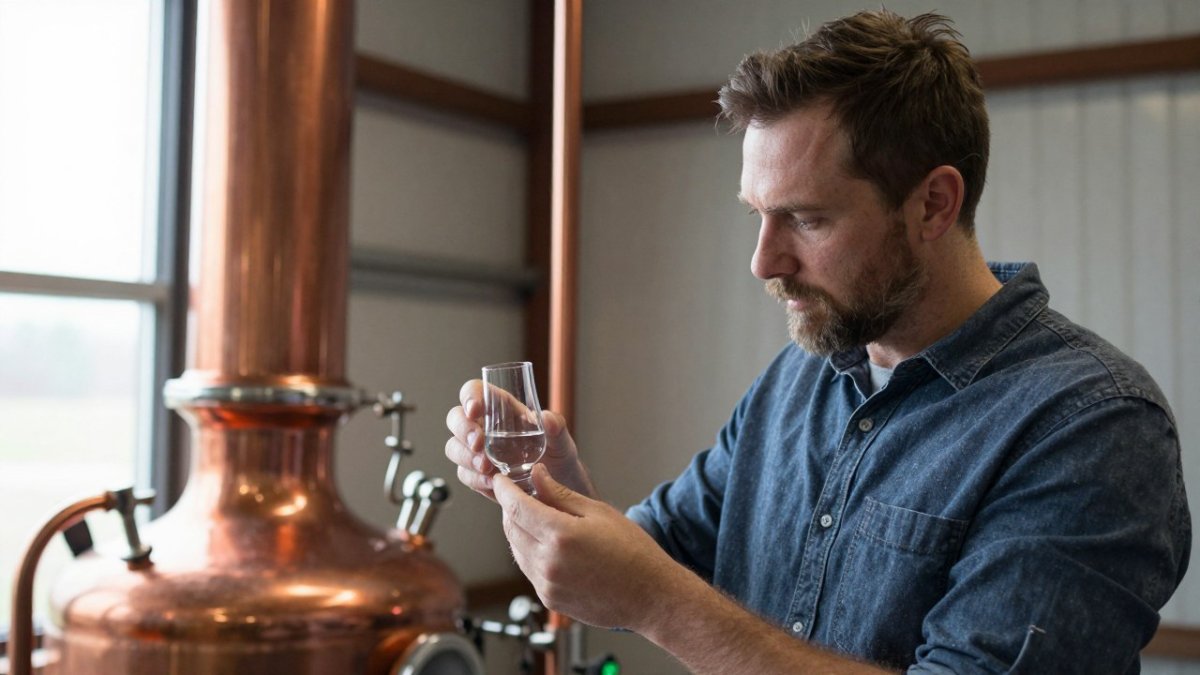
Making the cuts is a skill. Distillers rely on taste, smell and proof readings to decide when to start and stop collecting the hearts. Cut too early and the spirit carries harshness. Cut too late and it picks up heavy, unpleasant notes.
Whiskey Aging Requirements and How Barrels Shape Flavor
New spirit comes off the still clear and sharp. Aging in oak is what gives whiskey its color and much of its flavor. Barrels are usually charred on the inside, and the char and wood release vanilla, caramel and spice notes over time.
Whiskey labeling and aging standards are set by federal rules, so check the official guidance from the Alcohol and Tobacco Tax and Trade Bureau before relying on any age statement. Aging conditions also matter. Warm summers and cold winters push the spirit in and out of the wood, and that movement speeds extraction.
Some of the spirit evaporates through the barrel each year. Distillers call this the angel’s share. Patience matters, because a barrel can only be judged once it has aged long enough.
Bottling, Proof and Environmental Considerations
Before bottling, most whiskey is diluted with water to a set proof. Cask-strength releases skip this step and stay at barrel strength. Bottling is the last production step, but it is not the last decision. Filtration, color adjustments and proof all affect the final product.
Craft distilling also carries an environmental footprint. Spent grain, water use and energy for heating stills all add up. Ask producers about their practices if these issues matter to you.
Tasting Your Way Through a Craft Whiskey at Aspen Sky
The best way to understand craft whiskey is to taste it. Start with a small pour and let it sit for a moment. Smell first, then take a small sip and notice the sweetness, the spice and the finish. Compare two pours if you can, and see how the aging and mash bill change the glass.
If you want to taste our spirits in person, you can book a visit and talk with our team about how each batch is made. Our book a table at Aspen Sky page lists how to reserve a visit. Once you arrive, our tasting room offers flights and details on what’s pouring that day. And if you want to take a bottle home, our shop carries what we bottle. You can also read more about our story on the Aspen Sky blog.
Frequently Asked Questions
What is considered craft whiskey?
Craft whiskey is generally made by an independent distillery in smaller batches, with the distiller controlling most steps from grain to bottle. Definitions vary by source, so there is no single federal legal standard for the word craft in the United States. Look for a distillery that names its grain, describes its mash and states where and how the spirit was aged. Those details matter more than the label itself.
What makes a distillery craft?
A craft distillery is usually small, independently owned, and produces spirits in limited batches with significant hands-on work. Many craft distillers mill their own grain, run their own fermentation and choose their own barrels. Production scale and ownership are the clearest signals, since the word craft is not a regulated term under federal law.
Why does barrel aging matter for craft whiskey flavor?
Aging in charred oak lets the spirit pull color, vanilla, caramel and spice from the wood while oxygen slowly softens harsh notes. Wood interaction is the main reason fresh distillate and aged whiskey taste so different. Barrel size, char level, warehouse climate and time in the barrel all change the final profile, which is why two craft whiskeys made from the same grain can taste unlike each other.
Is it legal to distill whiskey at home?
In the United States, distilling spirits without a federal permit is illegal, even for personal use, under the Internal Revenue Code. Licensed distilleries must register with the Alcohol and Tobacco Tax and Trade Bureau (TTB) and pay federal excise tax. Visiting a licensed craft distillery is the legal way to learn how the spirit is made and taste it at each stage.
